How to Remove Stains From Clothes
Stains are unavoidable — but permanent stains usually are. The difference almost always comes down to how quickly you respond and whether you are using the right method for the specific stain type.
After 27 years of professional cleaning in Sarasota and surrounding areas, the team at Edla VIP Cleaning has seen every stain imaginable. Here is what actually works.
The Golden Rules To Apply Before Anything Else
Regardless of the stain type, these three rules apply every single time:
- Act immediately: The moment a stain occurs, address it. The longer it sits, the more it bonds to the fabric fibres.
- Use cold water first: Hot water sets protein-based stains — blood, egg, dairy — permanently. Cold water is always the safer starting point.
- Blot, never rub: Rubbing spreads the stain and drives it deeper into the fabric. Always blot gently from the outside edges inward.
- Check before you dry: Heat from a dryer permanently sets any stain that has not been fully removed. Always air dry and inspect first.

Common Stains + What to Use and How
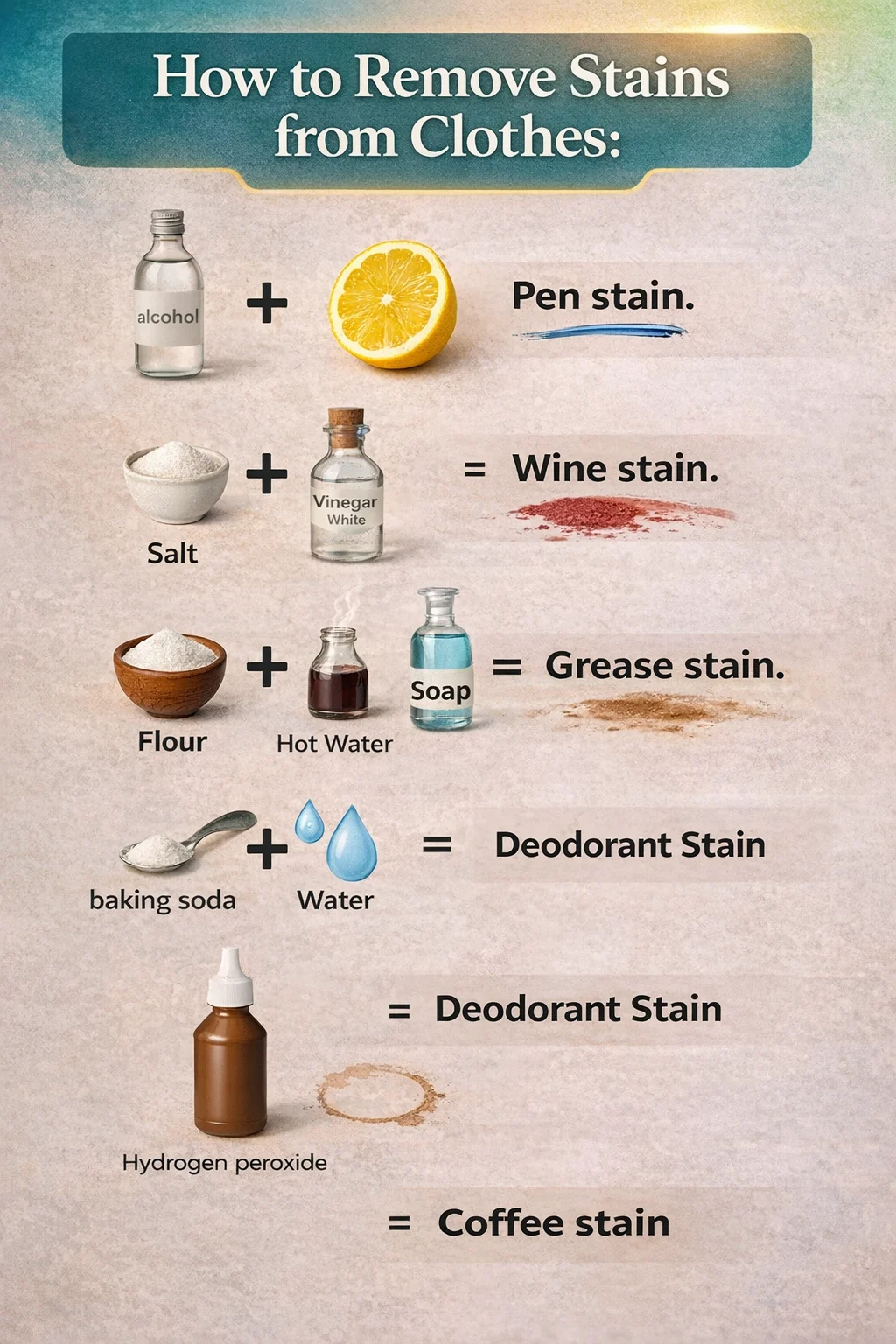
Different stains respond to different treatments. Using the wrong method can set the stain further or damage the fabric. Here is a practical guide to the most common clothing stains:
Coffee & Tea
- Blot immediately to absorb as much liquid as possible
- Rinse under cold running water from the back of the fabric
- Apply a small amount of liquid dish soap, work in gently, leave 5 minutes
- Rinse thoroughly with cold water — repeat if needed before washing normally
Red Wine
- Blot — do not rub — immediately with a clean cloth
- Pour a small amount of cold sparkling water or club soda onto the stain to help lift it
- Apply dish soap or a dedicated wine stain remover and leave for 10 minutes
- Rinse with cold water, then wash as normal — check before drying
Blood
- Use cold water only — hot water will permanently set blood stains
- Rinse under cold running water immediately, working from the back of the fabric
- Apply hydrogen peroxide to fresh stains on white or light fabrics — it will bubble and lift the stain
- For coloured fabrics, use an enzyme-based detergent and soak in cold water for 30 minutes before washing
Oil & Grease
- Do not add water first — water spreads oil stains
- Sprinkle cornstarch or baking soda directly onto the stain and leave for 15–20 minutes to absorb the oil
- Brush off gently, then apply a drop of dish soap directly to the stain
- Work in gently, leave 5 minutes, then rinse with warm water and wash normally
Grass
- Brush off any loose grass or soil first
- Apply white vinegar or rubbing alcohol to the stain and leave for 5 minutes
- Work in an enzyme-based detergent and leave for 15 minutes
- Wash in cold water — grass stains can be persistent, so repeat if needed before drying
Sweat & Deodorant
- Soak the affected area in a mixture of equal parts white vinegar and water for 30 minutes
- For yellow sweat stains on white fabric, apply a paste of baking soda, hydrogen peroxide, and a little dish soap
- Leave the paste on for 30–60 minutes, then rinse thoroughly
- Wash normally — avoid high heat in the dryer until the stain is fully gone
Ink
- Place a paper towel beneath the stained fabric to absorb ink as it lifts
- Apply rubbing alcohol to the stain with a cotton ball, working from the outside edges inward
- Blot repeatedly — do not rub — as the ink transfers to the paper towel below
- Rinse with cold water and wash normally
- Read the care label: The label tells you the maximum safe wash temperature and whether the item can be machine washed. Ignoring it risks shrinkage or damage.
- Cold water for most stains: Unless the care label specifically recommends warm or hot water, cold is safer — it is gentler on fabrics and will not set stains that may not be fully removed.
- Enzyme-based detergents: These are particularly effective on protein-based stains like blood, sweat, dairy, and food. Look for detergents labelled ‘biological’ or ‘enzyme-active.’
- Do not overfill the machine: Overloading reduces cleaning effectiveness. Clothes need room to move freely in the drum for proper rinsing.
- Air dry until certain: Never tumble dry a stained item until you have confirmed the stain is gone. Hang or lay flat to dry and inspect before applying heat.
When Home Treatment Is Not Enough
Some stains — particularly old, set-in stains, or stains on delicate fabrics like silk, wool, or dry-clean-only garments — go beyond what home treatment can safely handle. Attempting aggressive methods on delicate fabrics risks permanent damage.
For these situations, a professional cleaning service is the right call. Edla VIP Cleaning has been serving the Sarasota area since 1996, with over 27 years of experience handling everything from routine cleans to stubborn stain challenges. Our team uses eco-friendly products that are effective on stains without harsh chemical residue.
We serve Sarasota, Bradenton, Siesta Key, Longboat Key, Lakewood Ranch, Venice, Nokomis, Osprey, and surrounding areas — with flexible scheduling and quotes available in under a minute online.
Frequently Asked Questions
Q: Does hot water remove stains better than cold?
A: It depends entirely on the stain type. Hot water is effective on oil and grease — but it permanently sets protein-based stains like blood, egg, and dairy. When in doubt, always start with cold water. You can always move to warmer water if needed; you cannot undo a heat-set stain.
Q: Is it safe to mix stain removal products together?
A: No — avoid mixing cleaning products. Combining bleach with vinegar or hydrogen peroxide, for example, can produce harmful fumes. It can also cause unexpected chemical reactions that damage fabric. Use one product at a time, rinse thoroughly between applications, and follow label instructions.
Q: Can old, set-in stains still be removed?
A: Sometimes — but they are significantly harder to treat than fresh stains. Re-wetting the stain with cold water and applying an enzyme-based detergent soak is the best starting point. Avoid heat at all stages. For delicate fabrics or stains that have been set for a long time, professional cleaning is the safest option to avoid further damage.
Q: How do I stop colours from bleeding when treating stains?
A: Always use cold water — warm water accelerates colour bleeding. Test any treatment solution on a hidden seam or inner hem before applying it to the visible stain. Wash stained coloured items separately until you are confident the stain and treatment residue are fully removed.